
























TIC10 (ONC201)
CAS No.: 1616632-77-9
Capsid Cat: C21513
Please order through our authorised distributor.
Buy via DistributorDescription
Biological Activity
| Targets |
|
||
|---|---|---|---|
| In vitro | In a p53-independent manner, TIC10 (ONC201) causes a dose-dependent increase in TRAIL mRNA and induces TRAIL protein localization on the cell surface of several cancer cell lines. It has broad-spectrum activity against multiple malignancies in vitro and induces an increase in sub-G1 DNA content suggestive of cell death in TRAIL-sensitive HCT116 p53−/− cells, but does not alter the cell cycle profiles of normal fibroblasts at equivalent doses. This compound decreases the clonogenic survival of cancer cell lines and spares normal fibroblasts. It increases the percentage of sub-G1 DNA in cancer cells in a p53-independent and Bax-dependent manner, as previously reported for TRAIL-mediated apoptosis. TIC10-induced TRAIL up-regulation is Foxo3a-dependent, which also up-regulates TRAIL death receptor DR5 among other targets, potentially allowing for sensitization of some TRAIL-resistant tumor cells. The agent inactivates kinases Akt and extracellular signal–regulated kinase (ERK), leading to the translocation of Foxo3a into the nucleus, where it binds to the TRAIL promoter to up-regulate gene transcription. It is an efficacious antitumor therapeutic agent that acts on tumor cells and their microenvironment to enhance the concentrations of the endogenous tumor suppressor TRAIL. |
||
| In vivo | In the HCT116 p53−/− xenograft, treatment with TIC10 (ONC201) and TRAIL causes tumor regression to a comparable extent when both are administered as multiple doses. It also induces regression of MDA-MB-231 human triple-negative breast cancer xenografts, whereas TRAIL-treated tumors progressed. In DLD-1 colon cancer xenografts, this compound induces tumor stasis at 1 week after treatment, whereas TRAIL-treated tumors progress after a single dose. A single dose of it also induces a sustained regression of the SW480 xenograft and is equally effective when delivered by intraperitoneal or oral route, suggesting favorable oral bioavailability. It causes tumor-specific cell death by TRAIL-mediated direct and bystander effects and is an effective antitumor agent against orthotopic human glioblastoma multiforme tumors. |
Chemical Information & Solubility
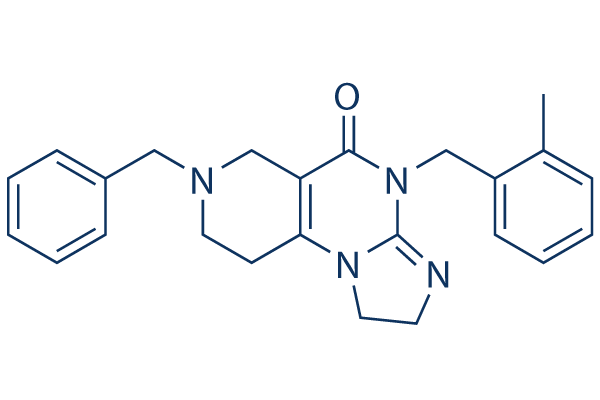
| Formula | C24H26N4O | ||||||||||||||||||||
|---|---|---|---|---|---|---|---|---|---|---|---|---|---|---|---|---|---|---|---|---|---|
| Molecular Weight | 386.49 | ||||||||||||||||||||
| CAS No. | 1616632-77-9 | ||||||||||||||||||||
| Solubility (25°C)* |
* <1 mg/mL means slightly soluble or insoluble. Capsid Bio tests the solubility of all compounds in-house; actual solubility may differ slightly from published values due to batch-to-batch variations. |
||||||||||||||||||||
| Preparing Stock Solutions |
|
||||||||||||||||||||
| Storage | 2 years -80 in solvent |
References
Additional information
| CAS Number | 1616632-77-9 |
|---|---|
| Storage Conditions | 2 years -80 in solvent |
| Capsid Category | C21513 |
| Selleck Category | S7963 |
| Supplier | Capsid |
Reviews
There are no reviews yet.