
























RRx-001
CAS No.: 925206-65-1
Capsid Cat: C13398
Please order through our authorised distributor.
Buy via Distributor2 years -80 in solvent
Description
RRx-001 is a novel epigenetic modulator with potential radiosensitizing activity. It inhibits glucose 6-phosphate dehydrogenase(G6PD) in human tumor cells, binds hemoglobin and drives RBC-mediated redox reactions under hypoxia. RRx-001 triggers apoptosis and exhibits anticancer activity.RRx-001 is also a downregulator of the CD47- SIRPα checkpoint pathway.
Biological Activity
| Targets |
|
||
|---|---|---|---|
| In vitro | RRx-001 exerts its anti-proliferative effect, at least partially, through interference with glucose 6 phosphate dehydrogenase (G6PD), a key enzyme in the pentose phosphate pathway, responsible for maintaining adequate levels of the major cellular reductant, NADPH. This compound affects glucose and G6PD enzyme activity in three different cancer cell lines namely Hep G2, CACO-2, and HT-29. It induced G6PD inhibition and increased glucose consumption in a concentration dependent fashion. This chemical induces p53 and PARP-1 via generation of ROS/RNS. It exerts anticancer activity, at least in part, by interfering with 3 crucial metabolic demands of rapidly proliferating cells: bioenergetics, macromolecular biosynthesis, and manipulation of cellular cytosolic redox homeostasis. This agent mediates nuclear translocation of Nrf2 and the activation of expression of its downstream enzymes HO-1 and NQO1 in tumor cells. Apart from epigenetic alterations, it acts via pleiotropic mechanisms including redox signaling and redox-induced dysregulation of many different signal pathways such as Nrf2, p53, PARP cleavage, HIF1 alpha, and G6PD activity. It also triggers p53 and p21 activity in response to double-stranded DNA breaks as well as deregulates cancer cellular energetics and metabolism. This compound is a potent activator of the Nrf2-ARE signaling pathway via ROS/RNS generation. | ||
| In vivo | RRx-001 shows promise for short-term blood flow redistribution in tumors with a pericyte- and α-SMA-rich vasculature. This compound monotherapy is well tolerated, with no dose-limiting toxicities. It not only facilitates nuclear translocation of Nrf2, but also upregulates endogenous Nrf2 expression in SCC VII tumors in mice. |
Chemical Information & Solubility
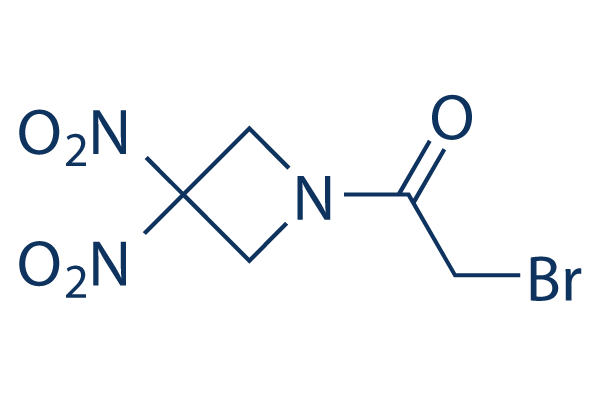
| Formula | C5H6BrN3O5 | ||||||||||||||||||||
|---|---|---|---|---|---|---|---|---|---|---|---|---|---|---|---|---|---|---|---|---|---|
| Molecular Weight | 268.02 | ||||||||||||||||||||
| CAS No. | 925206-65-1 | ||||||||||||||||||||
| Solubility (25°C)* |
* <1 mg/mL means slightly soluble or insoluble. Capsid Bio tests the solubility of all compounds in-house; actual solubility may differ slightly from published values due to batch-to-batch variations. |
||||||||||||||||||||
| Preparing Stock Solutions |
|
||||||||||||||||||||
| Storage | 2 years -80 in solvent |
Additional information
| CAS Number | 925206-65-1 |
|---|---|
| Storage Conditions | 2 years -80 in solvent |
| Small Target | Dehydrogenase |
| Big Target | Metabolism |
| Capsid Category | C13398 |
| Selleck Category | S8405 |
| Supplier | Capsid |
Reviews
There are no reviews yet.