
























KY02111
CAS No.: 1118807-13-8
Capsid Cat: C12437
Please order through our authorised distributor.
Buy via Distributor2 years -80 in solvent
Description
KY02111 promotes differentiation of hPSCs to cardiomyocytes by inhibiting Wnt signaling, may act downstream of APC and GSK3β.
Biological Activity
| Targets |
|
|
|---|---|---|
| In vitro | KY02111 (10 μM) increases the ratio of beating cardiac colonies as much as 70%-94% in cell aggregates of two hESC lines (KhES-1 and KhES-3), four hiPSC lines (253G1, IMR90-1, IMR90-4, and RCHIPC0003), and a mouse ESC line (R1). This compound results in 73%-85% postive IMR90-1 hiPSCs expressing the cardiac markers, cardiac troponin T (cTnT), αActinin, or NKX2.5, whereas only a few DMSO-treated cells are positive for the markers. It results in 16% postive IMR90-1 hiPSCs expressing the cardiac pacemaker marker, HCN4, whereas the ratio of Vimentin-positive cells (fibroblasts) decreases 3.3-fold. KY02111-induced cardiomyocytes (KY-CMs) expresses the cardiac markers, αMHC, NKH2.5, and HCN4, and that all of the ion channel genes examined are expressed at levels similar to those of adult heart tissue. This chemical downregulates the expression of 72.7% target genes of canonical WNT signaling in IMR90-1 hiPSCs, suggesting that it inhibits canonical WNT signaling in hPSCs. It clearly reduces luciferase activities in both IMR90-1 hiPSCs and HEK293 cells in a dose-dependent manner in the TOPflash assay. This compound (10 μM-25 μM) increases cardiac differentiation about 80-fold in transgenic monkey ESCs compared to the control and does not show toxicity to cells even at high concentration. It significantly reduces luciferase activity in the TOPflash assay in SW480 cells, whereas XAV939 and IWP-2 does not. It dramatically reduces luciferase activity induced by GSK3β inhibitor BIO in SW480 cells, compared to that of XAV939 and IWP-2. This chemical alone produces approximately 80% cTnT-positive cells, and in combination with other WNT inhibitors does not significantly increase differentiation efficiency, which shows that it effectively produces a high proportion of functional cardiomyocytes from hPSCs. | |
| Mechanism of Action | May act downstream of APC and GSK3β in the canonical WNT signaling pathway. |
Chemical Information & Solubility
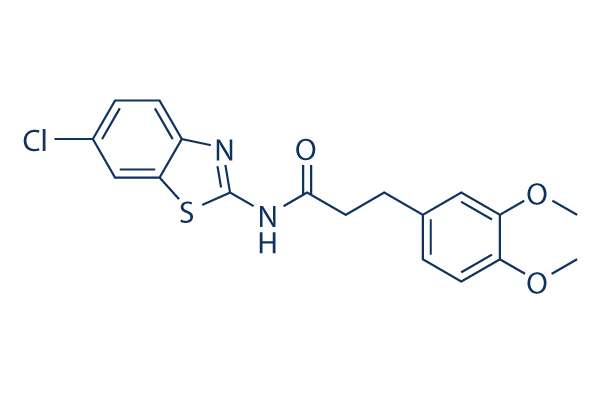
| Formula | C18H17ClN2O3S | ||||||||||||||||||||
|---|---|---|---|---|---|---|---|---|---|---|---|---|---|---|---|---|---|---|---|---|---|
| Molecular Weight | 376.86 | ||||||||||||||||||||
| CAS No. | 1118807-13-8 | ||||||||||||||||||||
| Solubility (25°C)* |
* <1 mg/mL means slightly soluble or insoluble. Capsid Bio tests the solubility of all compounds in-house; actual solubility may differ slightly from published values due to batch-to-batch variations. |
||||||||||||||||||||
| Preparing Stock Solutions |
|
||||||||||||||||||||
| Storage | 2 years -80 in solvent |
References
Additional information
| CAS Number | 1118807-13-8 |
|---|---|
| Storage Conditions | 2 years -80 in solvent |
| Small Target | Wnt/beta-catenin |
| Big Target | Cytoskeletal Signaling |
| Capsid Category | C12437 |
| Selleck Category | S7096 |
| Supplier | Capsid |
Reviews
There are no reviews yet.