
























Aloperine
CAS No.: 56293-29-9
Capsid Cat: C08548
Please order through our authorised distributor.
Buy via Distributor2 years -80 in solvent
Description
Aloperine is an isolated alkaloid in sophora plants such as Sophora alopecuroides L, and exhibits anti-inflammatory, antibacterial, antiviral, and anti-tumor properties.
Biological Activity
| In vitro | Compared with other alkaloids including sophoridine, sophocarpine, matrine, oxymatrine and cytisine, Aloperine treatment exerts the most potent cytotoxic activity against human cancer cell lines of differing tissue origins, including leukaemia cell lines HL-60, U937 and K562, oesophageal cancer EC109 cells, lung cancer A549 cells and the hepatocellular carcinoma HepG2 cell line with IC50 of 0.04 mM, 0.27 mM, 0.36 mM, 1.11 mM, 1.18 mM, and 1.36 mM, respectively. The strongest cytotoxic effect of this compound on HL-60 cells is observed at 72 hours with the inhibition rate of 94.1%. In contrast to the effect on leukaemia cells, up to 1 mM of this chemical does not significantly reduce the viability of normal PBMNCs at 72 hours. Treatment with this compound at 20 μM for 48 hours significantly induces apoptosis and autophagy in HL-60 cells in a dose-dependent manner. |
|---|---|
| In vivo | Topical application of 1% Aloperine suppresses 2, 4-dinitrofluorobenzene (DNFB)-induced increase in ear thickness and ear erythema in BALB/c mice, and significantly decreases the up-regulated mRNA and protein levels of tumor necrosis factor-alpha (TNF-α), interleukin-1beta (IL-1β) and interleukin-6 (IL-6) induced by DNFB in ear biopsy homogenates. Topical application of this compound reduces the DNFB-induced dermatitis (dermatitis index and ear thickness) in NC/Nga mice at day 13 and day 14 in a dose-dependent manner. This compound treatment reduces DNFB-induced lymphocytes infiltration and eosinophils infiltration in a dose-dependent manner. This compound treatment also reduces the DNFB-induced infiltration of mast cells in a dose-dependent manner. This compound reduces the plasma level of IgE in a dose-dependent manner. This compound markedly reduces DNFB-induced increase in IL-4, IL-13 and IFN-γ productions, while it increases the IL-10 level in a dose-dependent manner. This compound treatment significantly reduces the cytokine levels of TNF-α, IL-1β and IL-6 in ear biopsies homegenates of NC/Nga mice in a dose-dependent manner. |
Chemical Information & Solubility
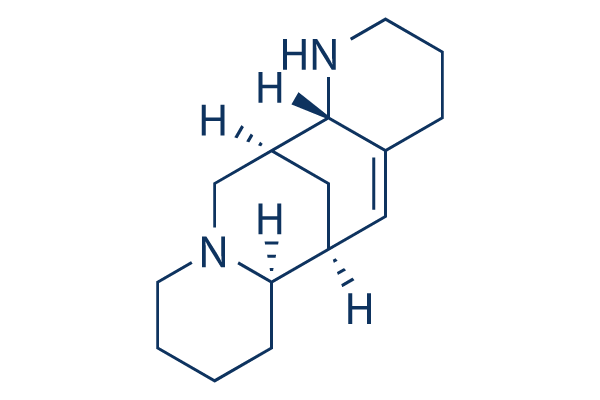
| Formula | C15H24N2 | ||||||||||||||||||||
|---|---|---|---|---|---|---|---|---|---|---|---|---|---|---|---|---|---|---|---|---|---|
| Molecular Weight | 232.36 | ||||||||||||||||||||
| CAS No. | 56293-29-9 | ||||||||||||||||||||
| Solubility (25°C)* |
* <1 mg/mL means slightly soluble or insoluble. Capsid Bio tests the solubility of all compounds in-house; actual solubility may differ slightly from published values due to batch-to-batch variations. |
||||||||||||||||||||
| Preparing Stock Solutions |
|
||||||||||||||||||||
| Storage | 2 years -80 in solvent |
Additional information
| CAS Number | 56293-29-9 |
|---|---|
| Storage Conditions | 2 years -80 in solvent |
| Small Target | Antiviral |
| Big Target | Microbiology |
| Capsid Category | C08548 |
| Selleck Category | S2420 |
| Supplier | Capsid | Selleck |
Reviews
There are no reviews yet.